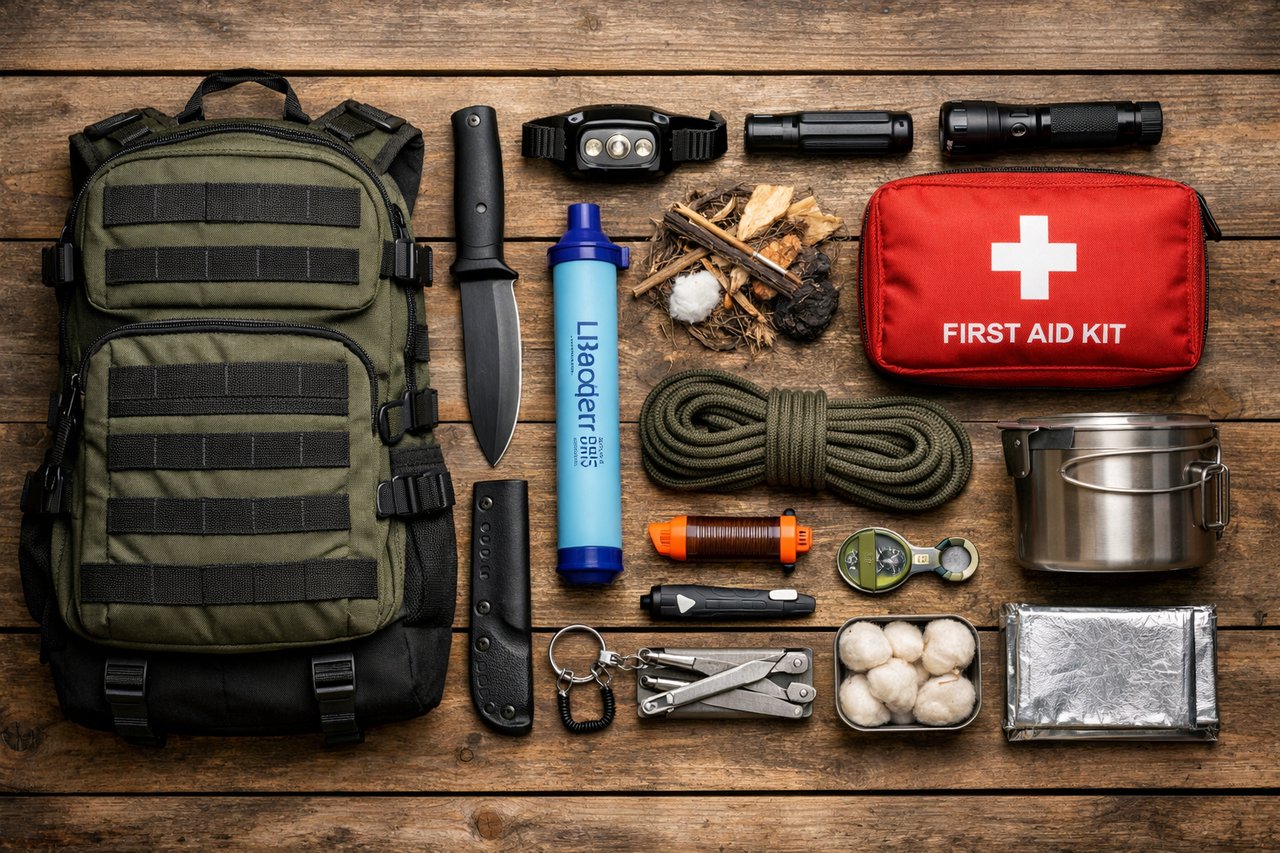
Beginner’s Guide to Survival Preparedness: Fire, Water, Shelter, and Essential Gear
Meta Description: Learn the essential survival skills and gear needed for emergencies, including fire starting, water purification, shelter, and food preparation.
Preparing for emergencies does not require extreme scenarios or expensive gear. Real-world disruptions happen more often than people realize. Power outages, natural disasters, supply interruptions, or temporary displacement can quickly turn everyday life into a challenge.
The key to preparedness is simple. Plan for the worst case scenario so everything less severe becomes manageable. By learning basic survival skills and building a practical gear setup, you can handle anything from short-term disruptions to extended emergencies.
Watch the full video
Why Survival Preparedness Matters
Most emergencies are not dramatic end-of-the-world situations. Instead, they look like:
-
A power outage that lasts several days
-
Local infrastructure failures
-
Natural disasters damaging homes or roads
-
Temporary food or water supply disruptions
Preparedness gives you a buffer. With the right knowledge and equipment, you can stay safe, comfortable, and self-sufficient until normal systems return.
Core Survival Skills Everyone Should Learn
Before focusing on gear, focus on skills. The most important abilities to practice include:
-
Starting a fire quickly
-
Purifying drinking water
-
Building temporary shelter
-
Cooking basic food in outdoor conditions
Practice these skills before you actually need them. For example, set up a tent in your backyard or practice lighting a fire safely outside. Familiarity removes stress during real emergencies.
The Rule of Threes
Survival experts often reference the “Rule of Threes,” which highlights the human body's limits.
You can typically survive:
-
3 minutes without air
-
3 hours in extreme weather
-
3 days without water
-
3 weeks without food
Understanding this framework helps prioritize what to prepare first.
The Big Three: Shelter, Sleep System, and Pack
Every survival or camping setup begins with three core components.
1. Shelter
A reliable tent protects you from rain, wind, and temperature changes.
Most tents fall into two categories:
-
Three-season tents: Designed for spring, summer, and fall
-
Four-season tents: Built for winter conditions and heavy snow
A helpful tip is to buy a tent rated for one more person than you need. This extra space allows room for gear and movement.
2. Sleeping Bag and Sleeping Pad
Sleeping systems are rated for specific temperatures.
Look for two ratings:
-
Comfort rating
-
Survival rating
Synthetic sleeping bags are generally cheaper and dry faster when wet. Down bags are warmer and lighter but can be more expensive.
A sleeping pad underneath the bag provides:
-
Ground insulation
-
Additional warmth
-
Better sleep comfort
3. Backpack
Your backpack should be the last item you purchase. Once all gear is assembled, you can determine the size needed to carry everything efficiently.
Look for packs with external attachment points and durable materials.
Fire: Your Most Important Survival Skill
Fire provides warmth, cooking capability, water purification, and psychological comfort.
The easiest and most reliable fire-starting tools include:
-
Standard lighters
-
Zippo-style refillable lighters
-
Stormproof matches
-
Ferrocerium rods
Avoid relying on primitive friction methods like rubbing sticks together. Those techniques require extensive practice.
Simple Fire Starting Materials
You can create effective fire starters at home:
-
Dryer lint
-
Cotton balls coated in petroleum jelly
-
Small sticks shaved into thin tinder
Start with material as thin as pencil lead, then gradually add thicker sticks until the fire is established.
Fire requires three things:
-
Fuel
-
Oxygen
-
Spark or heat
If one is missing, the fire will fail.
Water Collection and Purification
Water is the most critical survival resource.
A person can survive weeks without food but only a few days without water.
Portable Water Filters
Popular survival filters include:
-
Sawyer filters
-
LifeStraw systems
-
Press-style purifiers like Grayl bottles
These systems allow you to safely drink water from streams or natural sources.
Water Storage
During emergencies, fill every available container:
-
Bathtubs
-
Sinks
-
Water jugs
-
Storage tanks
Large containers can store hundreds of gallons if treated properly.
Chemical Water Treatment
Water can also be purified using:
-
Iodine tablets
-
Chlorine tablets
-
Unscented household bleach
A common guideline is a few drops of unscented bleach per gallon of water.
Boiling water for two minutes is another reliable purification method.
Clothing and Layering for Survival
Clothing choices significantly impact comfort and safety.
A smart system focuses on layers instead of one heavy jacket.
Typical layers include:
-
Base layer
-
Insulation layer
-
Waterproof outer layer
Why Merino Wool Is Popular
Merino wool is widely recommended for survival gear because it:
-
Resists odor buildup
-
Retains warmth even when damp
-
Dries relatively quickly
High-quality socks made from merino wool are especially valuable during extended outdoor use.
Food Planning for Emergencies
Emergency food options range from simple to advanced.
Long-Term Food Storage
Many survival kits include dehydrated meal buckets designed to last 25+ years. These provide convenient bulk calories for extended emergencies.
Backpacking Meals
Individually packaged meals such as freeze-dried camping food are lighter and easier to pack. However, they can be expensive.
Before relying on them, test a few brands at home to determine taste and portion size.
Smart Food Packing
When preparing food for trips or emergencies:
-
Pack one extra day of food
-
Include high-protein snacks
-
Include fast energy sources like sugar or carbs
Essential Survival Tools
Several tools dramatically improve survival capability.
Common items include:
-
Headlamps for hands-free lighting
-
Folding saws for cutting wood
-
Paracord (550 cord) for shelter building
-
Navigation tools such as compasses or GPS units
-
Seatbelt cutters and window breakers for vehicle emergencies
Each tool should have a backup plan in case it fails.
First Aid and Medical Readiness
First aid knowledge is one of the most valuable preparedness skills.
You are far more likely to encounter:
-
Car accidents
-
Minor injuries
-
Bleeding wounds
Than you are to face extreme survival situations.
Consider taking a basic first aid or trauma response course.
A well-stocked kit should include:
-
Gauze pads
-
Bandages
-
Antiseptic wipes
-
Compression wraps
-
Basic trauma supplies
Gauze is especially important, as it is frequently used to control bleeding.
Start Small and Build Over Time
Preparedness does not require buying everything at once.
Start with the basics:
-
Water purification
-
Fire starting tools
-
Basic shelter
-
First aid supplies
As skills improve, expand your gear and knowledge.
The most important step is simply starting.
Frequently Asked Questions
What is the most important survival skill?
Fire starting and water purification are among the most critical skills because they directly impact warmth, hydration, and food preparation.
How much water should you store for emergencies?
A common recommendation is at least one gallon of water per person per day, though individual needs vary.
What is the best survival backpack size?
Most people use packs between 40 and 70 liters depending on the length of the trip and the amount of gear required.
Do survival kits need expensive gear?
No. Many effective survival tools can be inexpensive or improvised using common household materials.
How often should emergency supplies be checked?
Inspect supplies at least twice a year to replace expired items and ensure equipment is functional.
Final Thoughts
Preparedness is not about fear. It is about confidence.
Learning survival skills, testing gear, and building a reliable emergency setup allows you to handle unexpected situations with calm and clarity.
Start practicing now. The knowledge you build today could make a critical difference when it matters most.