Real estate disclosure laws vary by state, but the principles behind stigmatized property are surprisingly consistent. This guide explains how these situations are typically handled and why honesty matters more than assumptions.
In real estate, not every disclosure is about cracks in the foundation or a leaky roof. Some properties carry a different kind of weight. A story. A history. A reputation.
These are called stigmatized properties, and they raise one of the most common and misunderstood questions in real estate law.
Do sellers and agents have to disclose them?
The answer depends on the type of stigma, the state, and how the question is asked.
What Is a Stigmatized Property?
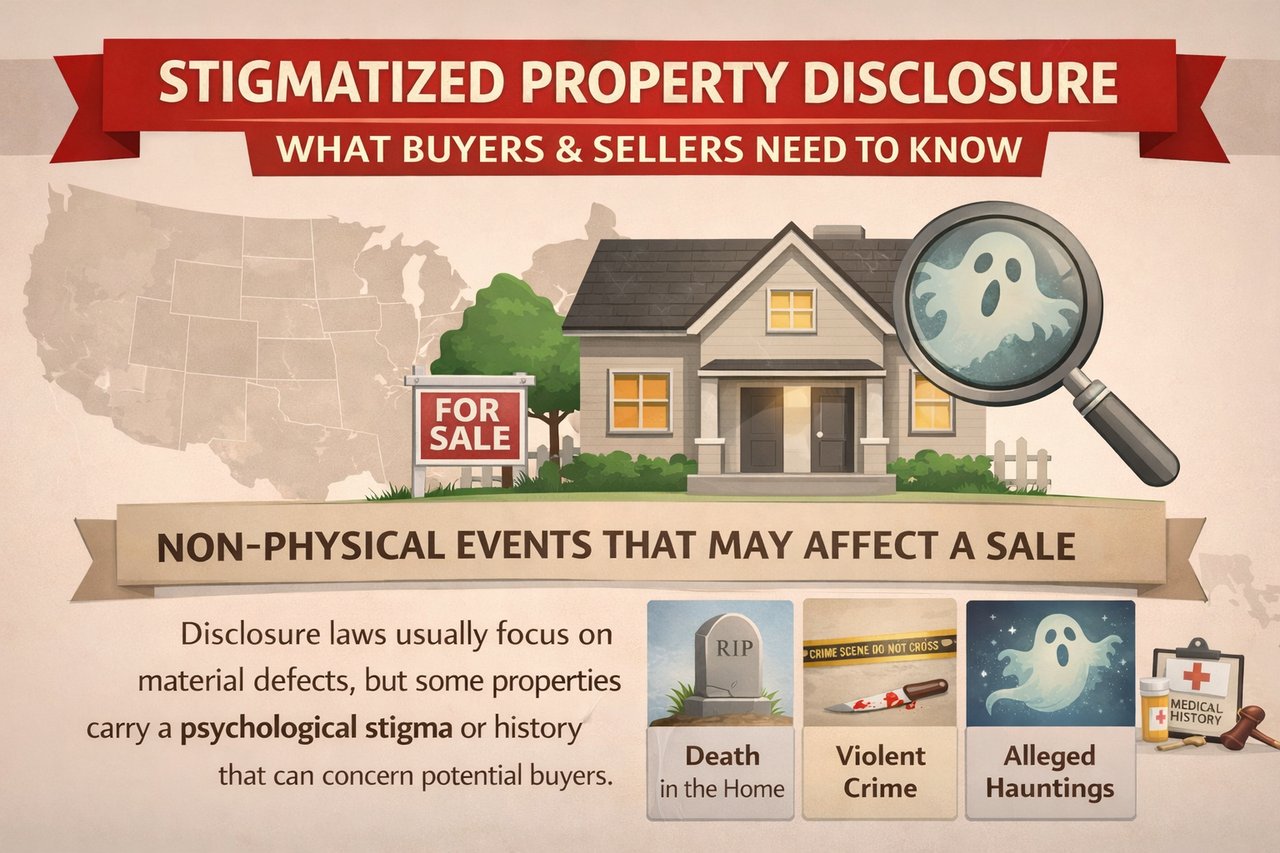
A stigmatized property is a home that has a non physical condition that could affect a buyer’s perception or willingness to purchase, even though the property itself may be structurally sound.
Common examples include:
- A death in the home
- Suicide or homicide
- A high profile crime
- Rumors of paranormal activity
- A prior occupant with a serious illness
Unlike material defects, stigma is about psychology and perception, not construction or safety.
The General Rule Across Most States
In most states, stigmatized property issues are not automatically considered material facts that must be disclosed.
That means sellers are often not required to volunteer the information.
However, there is a universal rule that applies everywhere.
You cannot lie.
If a buyer asks a direct question and you knowingly provide a false answer, that is misrepresentation and it can create liability for both the seller and the agent.
Silence is often legal. Dishonesty is not.
Death on the Property
A death in a home is one of the most common stigma questions buyers ask.
Most states do not require disclosure of a death caused by natural causes. Many states also do not require disclosure of deaths at all unless the buyer specifically asks.
Some states impose a time based disclosure rule, typically requiring disclosure if the death occurred within the last one to three years. California is the most well known example with a three year lookback period.
Outside of those statutes, disclosure usually hinges on whether the buyer asks directly.
Suicide or Homicide
Suicide and homicide are treated differently depending on the state.
Some states explicitly say these events do not have to be disclosed. Others require disclosure only if the event materially affects the value of the property and the buyer asks about it.
Courts tend to focus less on the event itself and more on whether the information would matter to a reasonable buyer.
Again, the bright line rule applies. If asked, you must answer truthfully.
Criminal Activity or Notoriety
Homes associated with high profile crimes or significant media attention fall into a gray area.
There is often no statute that directly addresses notoriety. Instead, courts look at whether the property’s history would reasonably affect market value or buyer decision making.
This is highly state specific and fact specific, which is why documentation and careful communication matter.
Paranormal Activity and Hauntings
Yes, this is real.
In rare cases, courts have ruled that if a seller actively promoted a property as haunted, they cannot later deny it. The issue is not ghosts. It is misrepresentation.
If a seller creates or reinforces a reputation, they may be legally bound by it.
Diseases and Prior Occupants
Federal Fair Housing law and many state laws are very clear on this point.
Sellers and agents are typically prohibited from disclosing that a prior occupant had HIV or AIDS. In many states, this protection extends to other serious illnesses as well.
Even if a buyer asks directly, the correct response is usually to explain that the law does not permit disclosure and to encourage the buyer to conduct their own due diligence.
Seller Duties Versus Agent Duties
This is where things get risky.
Even if a seller is not legally required to disclose a stigmatizing event, an agent may have a higher duty depending on state law.
If an agent knows information that could materially affect value and fails to disclose it when required, they may face liability even if the seller does not.
This is why agents should never guess, speculate, or freelance an answer.
Best Practices for Buyers, Sellers, and Agents
The legal minimum is not always the safest approach.
The best protection is knowing your state statutes, answering questions honestly and carefully, and keeping written records of buyer questions and responses.
When in doubt, slow down. Get guidance. Document everything.
Why This Matters
Stigmatized property disputes rarely start because of the stigma itself. They start because someone feels misled.
Clear communication and proper disclosure are not just legal protections. They are trust builders.
At My Real Estate Company, we believe informed clients make better decisions and better decisions lead to smoother transactions.
If you have questions about disclosure requirements in your state or how to handle a stigmatized property, our brokers are here to help.