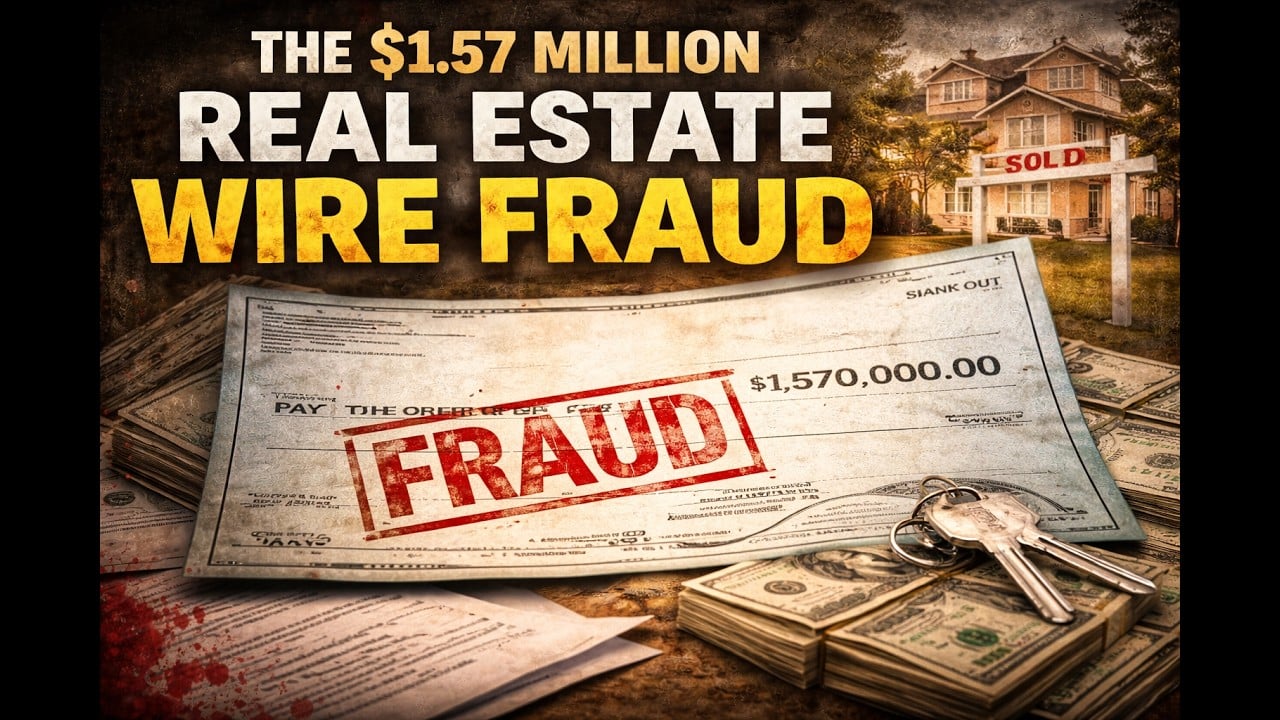
The $1.57 Million Email: Protecting Clients from Wire Fraud
Real estate wire fraud costs millions annually. Learn how agents in Washington DC protect clients with verification strategies and cyber security practices.
When a buyer in the Washington DC area wired $1.57 million in 2019, it seemed like a routine transaction—until a hacker intervened. This story illustrates why every real estate agent must treat email as a critical part of a deal’s risk profile.
Watch the Full Video
Understanding the Risks: How Fraud Happens
Wire fraud in real estate often begins quietly:
-
Hackers gain access to email accounts through phishing or reused passwords.
-
They observe transaction details like closing dates and wiring instructions.
-
Just before closing, fraudulent wire instructions are sent that look completely legitimate.
In the DC case, the buyer followed the instructions without suspicion. The result: funds disappeared, transactions collapsed, and federal authorities became involved.
The FBI tracks these as Business Email Compromise (BEC) cases. Billions of dollars are lost annually to these scams, and real estate transactions are prime targets because of predictable large wires and tight timelines.
Red Flags to Watch For
-
Emails with slightly altered addresses (even one letter).
-
Sudden changes in wiring instructions or bank accounts.
-
Urgent requests or instructions to keep changes confidential.
-
Emails that look professional but don’t match previously verified communication methods.
Client Education Is Key
Agents must educate clients repeatedly and clearly:
-
Never forward wiring instructions via email.
-
Independently verify all instructions by calling a known number—not one in the email.
-
Explain the stakes: protecting down payments, life savings, and avoiding collapsed transactions.
-
Use multi-factor authentication for all email accounts to reduce vulnerability.
Real-Life Examples
-
Washington DC Buyer: Wired $1.57 million to a fraudulent account due to a spoofed email.
-
Listing Agent Scenario: A client, even a police officer, almost wired money to fraudsters before verification.
-
Elderly Buyer: Sent $30,000 to a scammer after an agent’s personal email was hacked.
These cases highlight the importance of using secure email accounts and company policies around wire fraud protection.
Best Practices for Agents
-
Use brokerage emails with multi-factor authentication instead of personal accounts.
-
Include written guidance at contract signing, buyer consult, one week before closing, and the day before funds are due.
-
Emphasize verification of wire instructions using independently confirmed phone numbers.
-
Position the conversation around client protection, not technical fear.
“Nobody wants to feel stupid. Give your clients permission to verify wiring instructions. It protects them and keeps your transactions secure.” – Sandi Burnett
Frequently Asked Questions
Q1: Can wiring instructions ever be emailed safely?
No. Always verify instructions via a known phone number, even if the email looks legitimate.
Q2: How can I educate clients without overwhelming them?
Keep instructions short and tie them to what they care about: protecting their money. Repeat warnings at multiple points.
Q3: Is multi-factor authentication really necessary?
Yes. Email compromise is the starting point for most wire fraud cases. MFA drastically reduces risk.
Q4: What if clients ignore the warnings?
Document your education efforts in writing, and guide them step-by-step. Repetition is key.
Q5: Are personal email accounts safe for business transactions?
No. Always use secure company email accounts or forward personal emails through secure systems with MFA enabled.
Final Call to Action
Washington DC agents: Protect your clients and your business. Verify every wire, educate every buyer, and make multi-factor authentication your standard. One simple call can save millions and preserve trust.