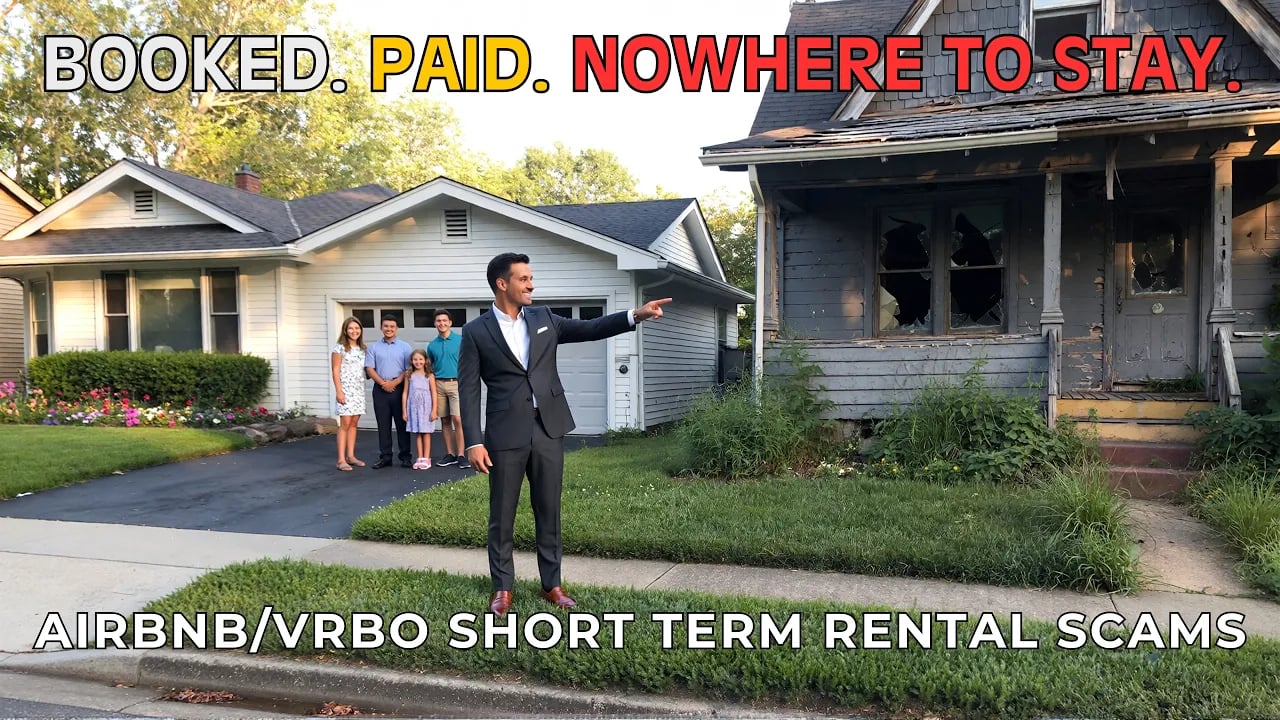
The $8.5 Million Airbnb Scam That Targeted Luxury Renters
A breakdown of the $8.5M Airbnb scam and key lessons for real estate agents, investors, and travelers navigating short-term rental risks.
Los Angeles, California is known for its luxury coastal rentals, from Malibu to Marina del Rey. But behind some of those high-end listings, a massive fraud operation quietly unfolded, impacting thousands of guests and raising serious concerns for real estate professionals across California.
Watch the Full Video
How the Airbnb Scam Worked
Federal prosecutors allege that two operators ran a large-scale short-term rental scheme across platforms like Airbnb, Vrbo, and Booking.com. Their operation focused heavily on high-demand areas in Los Angeles County, including:
- Marina del Rey
- Venice Beach
- Malibu
These are some of the most desirable coastal markets in Southern California, where a single weekend booking can generate thousands in revenue.
The Bait and Switch Strategy
The scheme relied on a calculated booking manipulation strategy:
- One property listed across multiple platforms
- Different prices for the same dates
- Highest-paying booking was honored
- Lower-paying bookings were canceled last minute
Guests who were bumped often received a message just hours before check-in citing:
- Plumbing issues
- Maintenance emergencies
- अचानक property problems
They were then offered a “comparable” replacement.
The Reality of the Replacement
The substitute property typically was:
- Smaller
- In a less desirable Los Angeles neighborhood
- Further from the beach
- Not consistent with original listing photos
This tactic made it harder for guests to dispute charges because technically, lodging was still provided.
Scale of the Operation
According to federal estimates:
- Over 10,000 reservations were impacted
- Approximately $8.5 million in revenue generated
- Activity spanned nearly two years
The operators allegedly managed close to 100 properties, often rotating listings through different LLCs to avoid detection.
Allegations of Discrimination
Beyond fraud, the case drew national attention due to allegations that booking decisions were influenced by racial bias.
Prosecutors stated that:
- Some cancellations were made based in part on perceived race
- Certain guests were deliberately avoided
While the defendants pleaded guilty to fraud-related charges, not discrimination, these allegations remain part of the public record and significantly shaped the case’s impact.
What This Means for Los Angeles Real Estate Professionals
For agents and investors in Los Angeles, California, especially those working in vacation markets like Malibu or Venice, this case highlights serious gaps in platform oversight.
Key Risks for Investors
Short-term rental investments often rely on platform trust. But this case shows:
- Platforms are marketing channels, not guarantees
- High revenue potential can mask operational risk
- Bad actors can impact entire neighborhoods and HOAs
What Agents Should Be Doing
If you work with buyers in Los Angeles County or similar markets:
- Build a vetting process into your buyer consultations
- Review listing history across platforms
- Watch for frequent LLC changes tied to properties
- Compare listing photos with actual property condition
These steps can protect clients from inheriting problematic or fraudulent operations.
Red Flags to Watch in Short-Term Rentals
Whether you're an investor, agent, or traveler in Los Angeles, these warning signs matter:
Listing Red Flags
- Same property listed on multiple platforms at different prices
- Listings disappearing and reappearing under new names
- Hosts managing unusually large portfolios
Booking Red Flags
- Last-minute cancellations with vague excuses
- Pressure to accept alternative accommodations
- Difficulty obtaining refunds
Host Red Flags
- Minimal reviews on high-end listings
- Multiple accounts tied to similar properties
- Inconsistent branding or communication
Advice for Travelers Booking in Los Angeles
If you're booking a luxury stay in Malibu, Venice, or Marina del Rey:
- Read host reviews carefully, not just property reviews
- Verify the host’s history across listings
- Avoid accepting last-minute substitutions
- Dispute charges immediately if something feels off
Trust your instincts. A legitimate listing should hold up under scrutiny.
The Bigger Lesson for the Industry
This case underscores a critical reality:
Platforms like Airbnb and Vrbo provide exposure, not protection.
Fraud detection systems should have identified:
- High-volume operators with multiple LLCs
- Cross-platform price discrepancies
- Repeated last-minute cancellations
But ultimately, due diligence still falls on:
- Agents
- Investors
- Buyers
Frequently Asked Questions
How did the Airbnb scam make money?
By double-booking properties and prioritizing higher-paying reservations, then redirecting or denying refunds to others.
Were guests refunded?
In many cases, refunds were denied because alternative accommodations were provided.
Did the operators go to jail?
They pleaded guilty to federal charges, including wire fraud, with sentencing determined by federal guidelines.
Can this happen in other cities?
Yes. Any high-demand short-term rental market, including Los Angeles, is susceptible without proper oversight.
How can agents protect clients?
By thoroughly vetting property history, ownership structure, and platform activity before purchase.
Final Call to Action
If you're buying, selling, or investing in short-term rentals in Los Angeles, California, you need more than market knowledge. You need a strategy for risk.
Work with a real estate professional who understands both the opportunity and the exposure in vacation rental markets across Los Angeles County. The right guidance can protect your investment and your reputation.