What Happens After a Crime Scene in a Home?
Discover how professional biohazard cleanup restores homes after deaths or traumatic events. Learn why specialized remediation is critical before restoration or sale.
When a traumatic event occurs in a home, the aftermath involves far more than emotional recovery. Properties affected by unattended deaths, suicides, or violent crimes require specialized remediation before they can be safely restored, occupied, or sold.
Many homeowners and real estate professionals assume cleanup is similar to standard cleaning. In reality, biohazard remediation is a complex process involving safety protocols, specialized equipment, and strict disposal regulations.
Understanding how the process works can help property owners and real estate professionals navigate difficult situations with clarity and confidence.
What Is Biohazard Cleanup?
Biohazard cleanup involves the removal, decontamination, and safe disposal of biological materials that can pose health risks. These materials may include blood, bodily fluids, infectious waste, or chemical contaminants.
Professional remediation companies are trained to handle situations such as:
-
Crime scenes and homicides
-
Suicides
-
Unattended deaths
-
Infectious disease contamination
-
Drug residue or narcotics contamination
-
Tear gas or chemical exposure
-
Hoarding environments with biohazard risks
These situations require trained technicians who understand how hazardous materials spread throughout a structure and how to remove them safely.
Why Standard Cleaning Is Not Enough
One of the biggest misconceptions about biohazard cleanup is that it only requires standard cleaning products.
In reality, biological materials behave very differently than everyday spills.
Blood and bodily fluids are highly absorbent and can penetrate deep into building materials such as:
-
Carpet and carpet padding
-
Hardwood flooring
-
Subflooring
-
Baseboards
-
Drywall
-
Structural framing
In cases involving unattended deaths, decomposition fluids can seep through flooring and even reach the ceiling of rooms below. When this occurs, entire sections of flooring, drywall, and subflooring may need to be removed to eliminate contamination and odor.
Without proper remediation, odors and bacteria can persist indefinitely.
The Structural Remediation Process
Professional cleanup teams follow a structured remediation process to ensure the property is fully restored to a safe condition.
1. Assessment
Technicians first evaluate the scene to determine:
-
Contamination areas
-
Structural damage
-
Safety risks
-
Required remediation scope
Many companies offer free assessments before beginning work.
2. Containment and Safety Setup
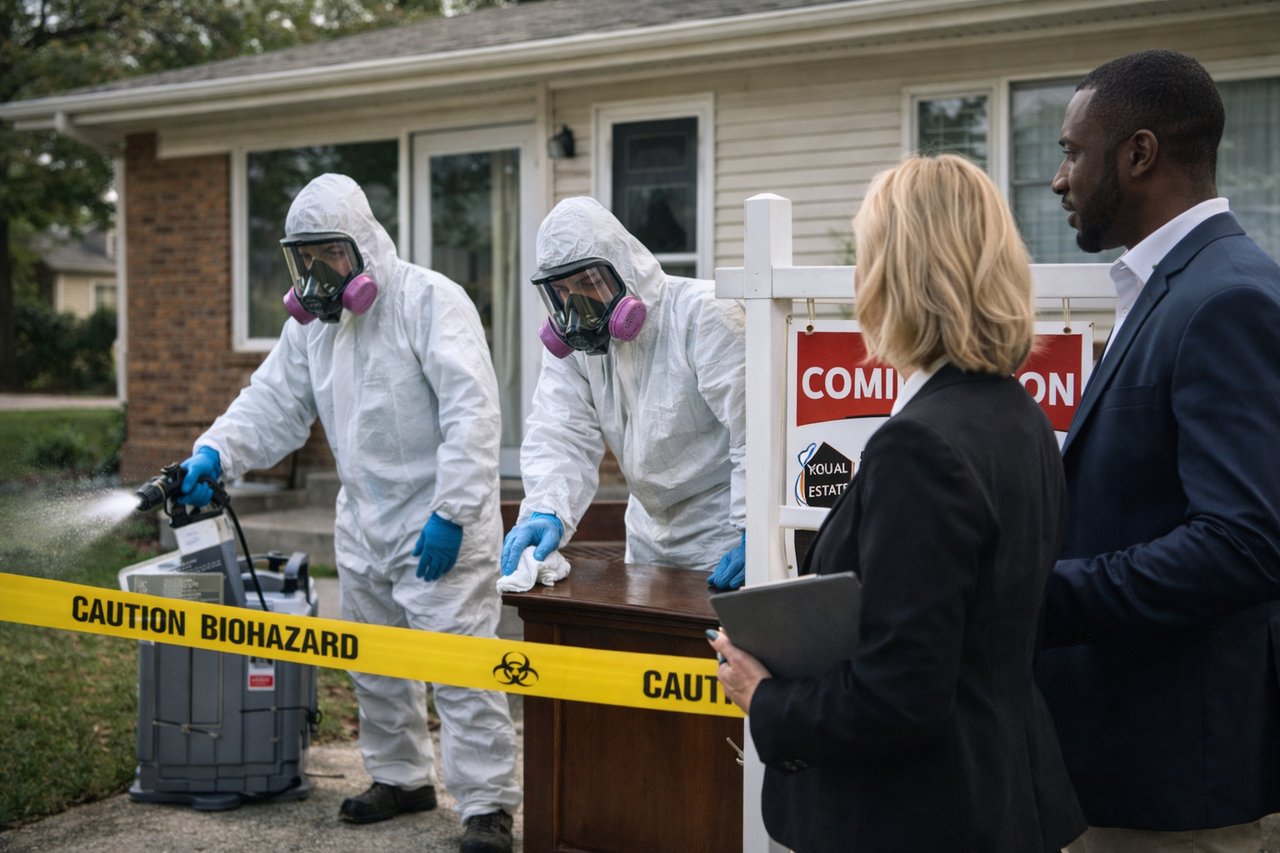
Technicians wear full personal protective equipment and establish containment zones to prevent contamination from spreading.
3. Removal of Contaminated Materials
Affected materials may include:
-
Carpeting
-
Padding
-
Flooring
-
Drywall
-
Furniture
-
Structural components
If fluids have penetrated deeply, crews may remove materials down to the framing.
4. Deep Decontamination
Hospital-grade disinfectants and specialized equipment are used to sanitize all surfaces.
This includes areas people may not expect, such as:
-
Ceilings
-
Door frames
-
Hallways used during body removal
-
Hidden surfaces where biological material may have splattered
5. Testing and Verification
ATP testing is often used to detect microscopic organic contamination.
Technicians perform testing before and after cleaning to confirm that all biological contaminants have been removed.
If readings are not acceptable, the area must be cleaned again until safe levels are reached.
Proper Biohazard Disposal
Biohazard waste cannot be disposed of through standard trash services.
All contaminated materials must be placed in specialized biohazard bags and containers. These are then transported to licensed medical waste disposal facilities for proper treatment.
Improper disposal can result in significant legal penalties.
Insurance Often Covers Biohazard Cleanup
Many homeowners are surprised to learn that biohazard remediation is often covered by homeowners insurance.
Coverage may apply to situations involving:
-
Unattended deaths
-
Accidental deaths
-
Crime scenes
-
Blood contamination
-
Certain hazardous exposures
Policies typically cover the cleanup costs beyond the homeowner’s deductible, though coverage varies by provider.
This coverage can be critical because extensive remediation and structural removal can become expensive quickly.
How This Impacts Real Estate Transactions
In real estate, situations involving death or contamination occasionally arise during the sale of a property.
Professional cleanup services play a key role in:
-
Preparing properties for restoration
-
Eliminating biohazards before listing
-
Removing odors that could affect showings
-
Ensuring the home is safe for buyers and contractors
Some remediation companies also assist with drug contamination testing for substances such as:
-
Methamphetamine
-
Cocaine
-
Heroin
-
Fentanyl
Testing can provide peace of mind for buyers concerned about previous illegal activity in a property.
[Internal Link Suggestion: What Sellers Need to Know About Property Disclosures]
A Difficult but Essential Service
Biohazard remediation professionals often enter homes during some of the most difficult moments families experience.
Beyond the technical aspects of cleaning, their work helps restore properties so families can move forward, whether through renovation, sale, or continued living in the home.
While it is not a part of the real estate process that many people think about, it plays a critical role in protecting health, safety, and property value.
Frequently Asked Questions
Do homes need professional cleanup after a death?
If biological contamination is present, professional remediation is strongly recommended. Bodily fluids and bacteria can penetrate building materials and create long-term health risks if not properly removed.
Is biohazard cleanup covered by homeowners insurance?
Many policies cover remediation related to traumatic events such as unattended deaths or crime scenes. Coverage varies, so homeowners should verify details with their insurance provider.
Can contamination spread beyond the original room?
Yes. Fluids can seep through floors, walls, and structural materials. Additionally, biological particles may spread through splatter patterns or during body removal.
How long does the cleanup process take?
The timeline depends on the extent of contamination. Smaller jobs may take several hours, while large structural remediation projects can take multiple days.
Can a home be safely sold after remediation?
Yes. Once a professional remediation team has completed cleaning and verification testing, the home can proceed to restoration and standard real estate processes.
Final Call to Action
Real estate transactions sometimes involve unexpected situations. Having the right professionals available makes a significant difference in navigating complex property conditions safely and responsibly.
If you are preparing a home for sale or have questions about remediation resources, working with experienced real estate professionals can help guide you through the process and connect you with trusted specialists.